GLP-3 RT vs GLP-2 TRZ
A science-backed comparison of two next-generation incretin-based compounds — covering receptor pharmacology, mechanism of action, and research findings to date.
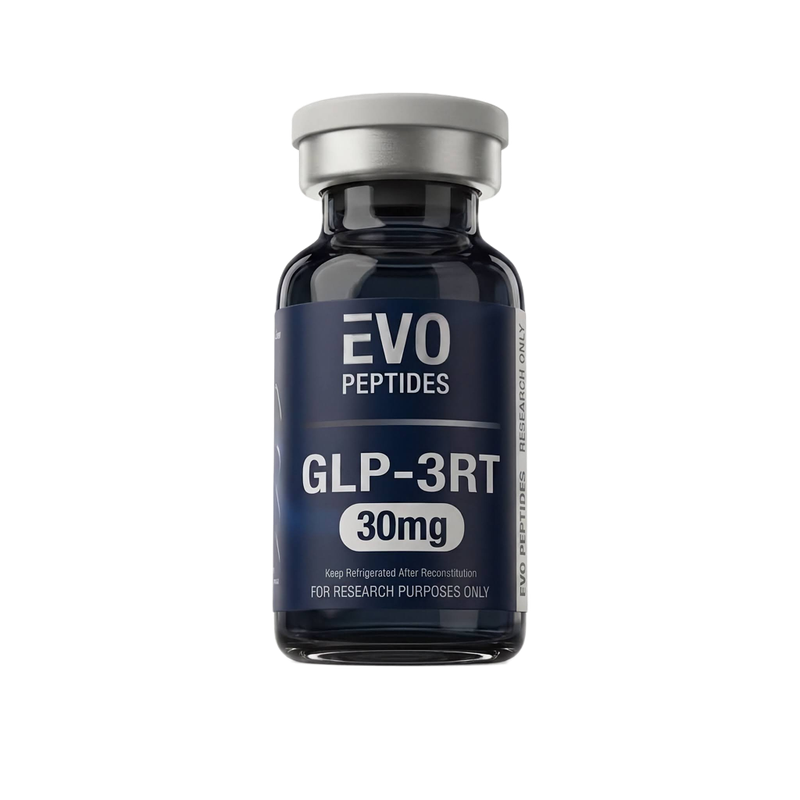
GLP-3 RT
GLP-2 TRZ
What Are GLP-3 RT and GLP-2 TRZ?
The Incretin Class
Both GLP-3 RT (Retatrutide) and GLP-2 TRZ (Tirzepatide) belong to the incretin-mimetic class — synthetic analogs engineered to activate hormone receptors in the gut-brain axis that regulate energy balance, glucose homeostasis, and lipid metabolism.
Incretin hormones like GLP-1 and GIP are naturally secreted by intestinal L-cells and K-cells in response to nutrient ingestion. Their signaling cascade influences insulin secretion, gastric emptying, appetite regulation, and energy expenditure — making their receptors high-value pharmacological targets in metabolic research.
What separates GLP-3 RT and GLP-2 TRZ from first-generation GLP-1 agonists is the addition of GIP receptor co-activation — and in the case of GLP-3 RT, the further addition of glucagon receptor agonism. This multi-receptor architecture defines each compound's research profile.
How They Were Developed
GLP-2 TRZ (Tirzepatide) was developed by Eli Lilly as a first-in-class GIP/GLP-1 dual agonist. Its structural design draws from native GIP peptide sequences, providing high affinity at GIPR, while GLP-1R activity is conferred through specific amino acid modifications.
GLP-3 RT (Retatrutide) extends the dual agonist framework by adding glucagon receptor (GcgR) agonism — producing a triple receptor agonist. The addition of GcgR activity was hypothesized to amplify energy expenditure and hepatic fat clearance beyond what GIP and GLP-1 agonism alone could achieve.
Receptor Targets: Where They Diverge
The key structural difference: Both compounds share GLP-1 and GIP receptor activity. GLP-3 RT adds a third receptor — the glucagon receptor (GcgR) — which researchers hypothesize contributes additive thermogenic and lipolytic effects through distinct downstream signaling pathways not accessible via GLP-1R or GIPR alone.
How Each Receptor Contributes
The Triple Agonist Hypothesis
The pharmacological rationale behind GLP-3 RT's triple mechanism centers on additive and potentially synergistic receptor cross-talk. GLP-1R activation reduces food intake and slows nutrient absorption; GIPR co-activation amplifies insulin response and may modulate reward circuitry; GcgR agonism independently upregulates energy expenditure pathways.
In theory, the combination allows GLP-3 RT to influence energy balance from multiple angles simultaneously — reducing intake (GLP-1), modulating storage (GIP), and increasing expenditure (GcgR). Whether these effects are additive, synergistic, or subject to compensatory attenuation remains a primary question in ongoing research.
Critics point out that glucagon receptor agonism, if unbalanced, risks hyperglycemic effects given glucagon's classical counter-regulatory role. The degree to which this risk is mitigated by concurrent GLP-1R-mediated insulin sensitization is a central variable in GLP-3 RT research programs.
GLP-2 TRZ's Dual Architecture
GLP-2 TRZ operates on the validated GLP-1/GIP dual axis with a structural bias toward GIP. Unlike earlier GLP-1 agonists where GIP activity was considered incidental, Tirzepatide was deliberately engineered for high GIPR potency. The GIPR component is believed to contribute to the compound's tolerability profile by potentially attenuating nausea-related signaling that pure GLP-1R agonism can produce.
The dual GLP-1/GIP framework is now well-characterized in peer-reviewed literature, giving GLP-2 TRZ a deeper published research base than GLP-3 RT as of 2026 — including mechanism-of-action studies, receptor binding affinity data, pharmacokinetic profiling, and cellular signal transduction pathway analysis.
What the Research Shows
Phase II trials for Retatrutide (GLP-3 RT) published in the New England Journal of Medicine (2023) reported findings of interest in subjects with obesity. Researchers observed dose-dependent changes in body weight metrics over 24 weeks across multiple dosing cohorts. The trial design included assessments of cardiometabolic markers, adipose tissue distribution, and hepatic fat content — reflecting the triple mechanism's proposed breadth of effect. Phase III programs were ongoing as of 2025–2026.
In rodent models, Retatrutide demonstrated effects on adipose tissue browning consistent with GcgR-mediated thermogenesis, as well as hepatic lipid reduction consistent with the combination of all three receptor targets. Preclinical data also examined lean mass preservation — a key variable distinguishing compound profiles in body composition research.
Tirzepatide (GLP-2 TRZ) has accumulated a substantial clinical evidence base through the SURPASS and SURMOUNT trial programs. SURPASS trials examined glycemic endpoints across Type 2 diabetes populations; SURMOUNT trials examined adiposity endpoints. Across multiple Phase III trials, researchers characterized dose-response relationships, tolerability profiles, cardiovascular marker changes, and sustained metabolic effects over 72-week observation windows.
Mechanistic research on GLP-2 TRZ has examined the relative contribution of GIPR vs GLP-1R agonism to its observed effects. Studies using receptor-specific antibody blockade in preclinical models suggest the GIPR component contributes meaningfully to adipose tissue effects independent of GLP-1R signaling. Transcriptomic analyses of adipose tissue in GLP-2 TRZ-treated subjects have identified gene expression patterns consistent with lipid metabolism modulation.
Compound Comparison
| Parameter | GLP-3 RT | GLP-2 TRZ |
|---|---|---|
| Common Name | Retatrutide | Tirzepatide |
| Receptor Class | Triple Agonist | Dual Agonist |
| GLP-1R Activity | ✓ | ✓ |
| GIPR Activity | ✓ | ✓ |
| GcgR Activity | ✓ | — |
| Thermogenic Pathway | GLP-1 + GIP + Glucagon | GLP-1 + GIP |
| Developer | Eli Lilly | Eli Lilly |
| Peptide Backbone | GIP-derived w/ GcgR mods | GIP-derived |
| Regulatory Status (2026) | Phase II/III trials | FDA-approved (clinical) |
| Published Clinical Trials | Phase II (NEJM 2023) | SURPASS + SURMOUNT |
| Research Data Depth | Emerging | Established |
Selecting a Compound for Research
When GLP-3 RT May Be the Relevant Compound
Research programs focused on multi-receptor metabolic signaling, thermogenesis pathways, or the incremental role of glucagon receptor co-agonism will find GLP-3 RT uniquely positioned. Its triple mechanism makes it a useful model compound for studying how GcgR activity interacts with the GLP-1/GIP axis — questions that dual agonists like GLP-2 TRZ cannot address by design.
GLP-3 RT is also relevant to research on hepatic fat metabolism, given glucagon's established role in hepatic lipid mobilization. Researchers investigating NAFLD models may find its receptor profile particularly relevant.
When GLP-2 TRZ May Be the Relevant Compound
Research requiring a well-characterized comparator compound with an established pharmacokinetic and receptor binding dataset will find GLP-2 TRZ the stronger choice. Its extensive SURPASS and SURMOUNT trial data provides benchmark reference data unavailable for GLP-3 RT as of 2026.
For research examining GIP receptor biology specifically, GLP-2 TRZ is useful precisely because its dual architecture isolates the GLP-1/GIP combination without glucagon receptor confounding. Studies seeking to characterize GIPR-specific contributions to metabolic outcomes benefit from this cleaner receptor profile.
The Common Thread
Both compounds share GLP-1R and GIPR agonism, meaning research programs examining these shared pathways can potentially use either compound as a model. Head-to-head mechanistic comparisons between the two represent a legitimate and underexplored research direction as of 2026 — particularly in cellular signaling and gene expression contexts.
The compounds also share the characteristic half-life range typical of fatty acid-conjugated incretin analogs, both designed for extended receptor engagement. This pharmacokinetic similarity facilitates direct comparative protocols where researchers intend to isolate receptor profile differences rather than half-life variables.
Research Questions
Shop Both Compounds
COA-verified. Lyophilized. Ships same day from Wisconsin.
- ReceptorsGLP-1 · GIP · GcgR
- FormLyophilized Powder
- PurityCOA-Verified
- UseResearch Only
- ShippingSame-Day · 3 PM CST
- ReceptorsGLP-1 · GIP
- FormLyophilized Powder
- PurityCOA-Verified
- UseResearch Only
- ShippingSame-Day · 3 PM CST